




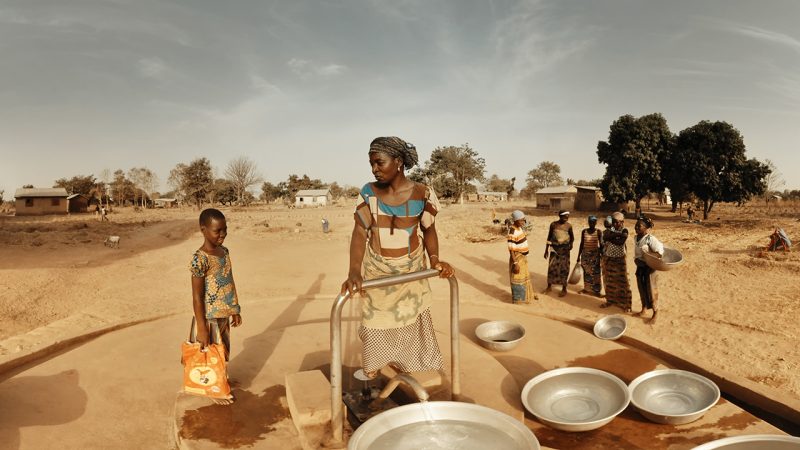

Organisations such as Greenpeace and Amnesty International finance their projects with the help of donations. A study by the International School of Management (ISM) now shows that the use of virtual reality has not only had a positive effect on their brand, but has also increased their willingness to donate.
Aid organisations often advertise in pedestrian zones or on the internet. They use emotional short films in particular to raise money for good causes. While films used to be made in 2D, some NGOs now use 3D films shot with a 360-degree camera. This gives the viewer an even more intensive insight into the everyday lives of refugees or the world of endangered animal species.
VR reinforces the emotional aspect
Nelly Dux ist Masterabsolventin der ISM Hamburg und führte in ihrer Abschlussarbeit eine Studie zu diesem Thema durch. Um herauszufinden, ob Virtual Reality einen Einfluss auf die Wahrnehmung von Hilfsorganisationen und Spendenbereitschaft hat, sahen sich Studienteilnehmer Werbefilme von Greenpeace in 2D am Computer und in 3D mit einer VR-Brille an. Ergebnis war, dass die Probanden sich viel stärker auf die filmische Geschichte und Botschaft mit dem Einsatz von Virtual Reality einlassen konnten. „Die anschliessende Befragung hat gezeigt, dass Teilnehmer, die den Film mit einer VR-Brille geschaut haben, positiver gegenüber der Hilfsorganisation gestimmt waren als zuvor. Das hat wiederum die Bereitschaft zum Spenden erhöht“, erklärt Dux, die an der ISM Hamburg Wirtschaftspsychologie studiert hat. „Mit dem Einsatz von Virtual Reality werden Themen wie zum Beispiel die Flüchtlingsproblematik noch greifbarer, weil wir uns als Zuschauer quasi mitten im Geschehen befinden – wir erleben unsere Emotionen noch intensiver.“
Swiss NGOs are also making extensive use of VR. Helvetas was the first Swiss NGO to use an integrated virtual reality campaign back in 2017, about which we reported.
Source: horizont / Image: Helvetas



 Deutsch
  Français
  English (UK)
  Italiano