



Was ist Realität? Eine Frage, die aus philosophischer Sicht keine allgemein verbindliche Antwort zuzulassen scheint, wird auch der Duden nicht klären können. Nichtsdestotrotz ist im Buch der Rechtschreibung „Realität“ nüchtern in vier Kategorien unterteilt, mit welchen sich arbeiten lässt: „Wirklichkeit“, „reale Seinsweise“, „Tatsache“, „Immobilien“. Während Letzteres nicht Thema ist, dienen die andern in diesem Artikel der Reflexion, werden aufeinander bezogen und führen zum Ende hin zur „virtuellen Realität“.
Von hinten aufgerollt zunächst zur „Tatsache“. Um den Begriff näher zu fassen, bietet es sich in der heutigen Zeit der Wikis (WikiLeaks, Wikipedia & Co.) an, Wiktionary zu konsultieren. „Das freie Wörterbuch“, wie es selbstreferenziell heisst, definiert: „Etwas wirklich Vorhandenes, Existierendes.“ Dieselbe Quelle schlüsselt „Wirklichkeit“ wiederum als „auf Tatsachen beruhende äussere Welt“ auf. Was die „reale Seinsweise“ anbelangt, hinterlässt Wiktionary eine Lücke, für die der Duden lediglich ein Beispiel nennt: „die Realität der platonischen Ideen“ – sich an Platons Ideenlehre und der damit verbundenen metaphysischen Realität zu versuchen, sprengte an dieser Stelle aber den Rahmen.
(Un)living everyday reality
Unabhängig von Platon soll aber der Versuch gelten, bis hierhin Gesammeltes mit gleichen Worten frei zu übersetzen: Die „Realität“ ist eine wirkliche, sprich tatsächliche, das heisst existierende äussere Welt, in der zu sein wiederum Realität ist. Unabhängig von der übersetzerischen Nähe zum Gemeinten, halte der Satz dafür her, zu ihm ein paar Gedanken zu spinnen und/oder auch gedanklich zu spinnen: Kann Wikipedia geglaubt werden, ist das, was existiert, „räumlich vorhanden“, mag laut Duden leben und im Sinne Wiktionary auch nicht: „Darüber existiert ein Gesetz“ – das, wenn auch vom Menschen gemacht, textlich auch bestünde, wenn er nicht mehr wäre. Gedruckt ist es auf Papier, das Bäumen entstammt, die wiederum gelebt haben. Angenommen, gar alles, was in der äusseren Welt existiert, hat mit Leben zu tun, stellt sich noch die Frage, ob, was ist, selbst ohne Leben sein kann – Steine etwa.
Research results published by Jörn Peckmann at the University of Bremen in 2008 indicate, contrary to popular belief, that stones are alive, referring to traces of microorganisms in sedimentary rocks that are several hundred million years old.
Seen under a microscope, the world is full of flickering life. And if nature is understood as the all-encompassing organism of our world, it can be argued that there is no dead matter, but that everything, no matter how small, is alive. This is the subject of a dialogue in Gabriele Reuter's "Der Spiegel des Ursprungs: Roman mit philosophischem Hintergrund": "But what about matter? Do you think the stone is dead matter?" "Isn't it?" "No, nothing is dead! Not even Aristotle's ancient thoughts. His spirit is still very much alive in this world!" "But the stone or the piece of wood, they are dead objects. They don't move!" "Not of their own accord! But the stone also grows and moves through the forces of nature. Take a piece of wood and turn it into a window frame. [...] It expands, swells with moisture, it warps." In this sense, a corpse is also alive, because it changes, decomposes. Because it consists of the remains of a deceased animal or human, it would be dead again ... or simply no longer alive in that worn-out body?
Is the inner world real?
Time to pull the ripcord so as not to end up at the birth of the existing outer world. With the established assumption that it is a reality permeated by life, we still need to discuss what the inner world is all about. Is it not real? We often refer to the outer world in everyday life: For example, an economist tells a colleague in a meeting that the profit forecast he has presented for the next financial year is unrealistic; a mother struggles to get her son to start an apprenticeship: "It's unrealistic of you to think that you can be employed as a graphic designer without an apprenticeship qualification. Isn't that what you want?" Realities projected into the future that already exist as ideas? They may be, because they are expressed and exist in the outer world like Aristotle's ideas, which live on in people's heads despite his death. But inside, in the inner world. Isn't that real ... or what does the dictionary mean by "outer world"?
Here's an example: If no one knows that Isaac is smoking a cigarette and he thinks it tastes horrible, is that a reality? Whilst it is not a reality for others because they know nothing about it, Isaac still believes that he has experienced it. He had the cigarette in his mouth, didn't enjoy it, thought about it in his mind and therefore decided never to smoke again. What would reality be if it only counted as such outside of us, even though thoughts help to shape it? If Isaac had now taken a liking to the cigarette and decided to continue smoking, it would be visible to others in the outside world; his inner decision, a fact, would have become real on the outside. Just before slipping into a philosophical coma, reality could now be interpreted in this way as "an external world based on facts": Seeing Isaac continue to smoke is a reality that has only become possible through the fact that he has decided to do so.
What is a fact and is it a reality?
A fact itself would not yet be a reality, but it leads to it by co-constituting the external world. Conversely, someone's mental reaction to seeing Isaac smoking would be reduced from reality to fact. A mere thought "What, he's smoking?" would not be a reality - this is what was meant at the beginning of this article by "mentally spinning" and in straightening out the mind, let us now boldly assume that both the inner world and the outer world are indeed reality - after all, the Duden dictionary lists the term "reality" as a fact. But what is a fact?" That which is? And what is? Is Isaac's secret smoking a fact, even if it cannot be witnessed by a second person?
If he had lit the cigarette in front of a friend, there would be a consensus. Max confirms that Isaac smokes. However, the two may not be in agreement when it comes to the question of whether a person is basically good or not. What is the actual situation? There is also a lack of consensus on smaller questions, for example: Was it brave to jump over a stream on the walk home together? Isaac did it, he thinks yes. Max, no, his friend could have easily jumped over the stream and falling into it wouldn't have been dangerous. Isaac: "I could have scraped my leg on the sharp stones", to which Max replies: "I didn't see any sharp stones." So what are the facts? They each see a different one in terms of courage and the risk of injury and experience a different reality for themselves, while they both agree that Isaac jumped.
Everyday reality and "virtual reality" in juxtaposition
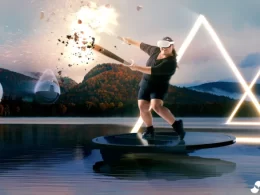
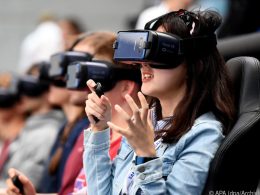
And finally to "virtual reality", @ Wikipedia characterised as "the representation and simultaneous perception of reality and its physical properties in a real-time, computer-generated, interactive virtual environment." If Isaac were to jump over a stream in it, he would probably feel the same way, be afraid of not making the jump and hitting sharp stones. The programme could graphically show him his scraped knees, his virtual body would be injured. Is it reality? Is a simulated injury reality, while Isaac's body is unharmed in the everyday world? Without it, "virtual reality" would not even exist.
The two worlds can still be easily distinguished, but the more the virtual world approaches the everyday world, the more people lose themselves in the former and neglect their connection to the latter, the more real the virtual world appears and, driven to absurdity, they may end up believing it to be the only real one - similar in experience to a dream that is believed to be real. But just as people have to be in it, but have to wake up from it in order to secure their existence in the everyday world, they will not be able to maintain their actual life in the virtual world, no matter how lavishly programmed their meals are, and their food will lack flavour. The experience in virtual space is limited and sufficient self-care is not possible virtually. Such a "reality" is a reduced one, according to Duden, one that "is not real, "does not exist in reality, but appears real". "Reality" understood as genuine, everyday reality, emphasises that it has priority as an existential necessity.
Accordingly, the virtual world is not an alternative world, but at the same time has more to offer than everyday reality can; a more far-reaching freedom, for example, to bring environments to life, the possibility of creating mountains yourself, moving them, flying around them and not scraping your knee when jumping over a specially created stream or one provided by a programmer. Many positive things will be possible in the fields of gaming, medicine, education, tourism and many others. Now it depends on how sensibly individuals deal with "virtual reality" and to what extent a consensus is reached.


 Deutsch
  Français
  English (UK)
  Italiano