




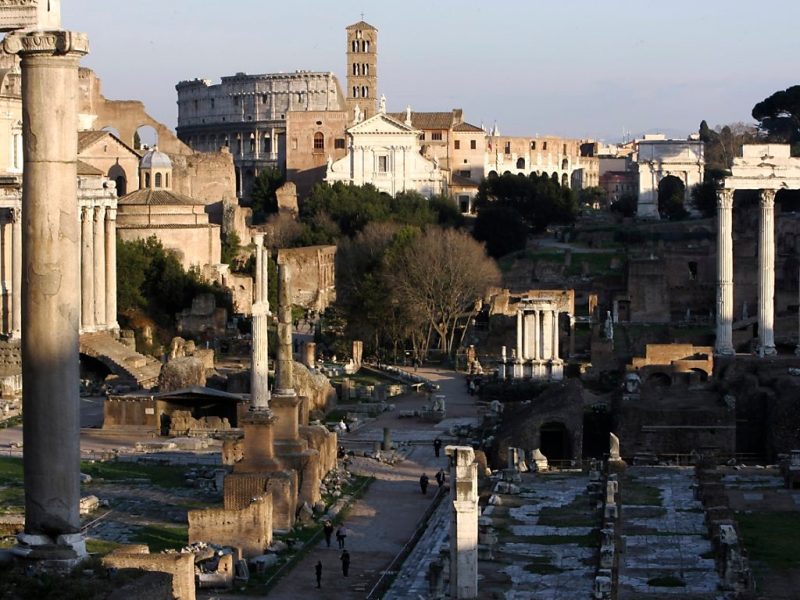

The archaeological sites of Rome are becoming more accessible: with 3D glasses and virtual reality, more than 7000 ancient buildings can now be explored on site or on the computer - just as they looked in the year 320 AD.
Launched in 1996, the international Rome Reborn project covers an area of 14 square kilometres in the Eternal City, which can be flown over in a virtual hot-air balloon.
The highlights are the Roman Forum and the Basilica of Maxentius on the edge of the Forum. Other sights such as the Colosseum and the Pantheon are to follow in the next two to three years, according to digital archaeologist Bernard Frischer.
„Das Jahr 320 haben wir ausgewählt, weil wir für diese Periode die meisten Informationen besitzen und deshalb so akkurat wie möglich sein können“, fügte Frischer hinzu. Der 69-jährige Direktor des Projekts wollte nach eigenen Angaben bereits 1974 „der Welt die wunderbaren Monumente nahebringen“. Doch damals fehlte es an der erforderlichen Technologie. Mittlerweile wurde das Projekt entsprechend den verbesserten technologischen Möglichkeiten drei Mal überarbeitet – bei einem Kostenaufwand von insgesamt 2,6 Millionen Euro.
The dream of virtual gladiator fights and chariot races
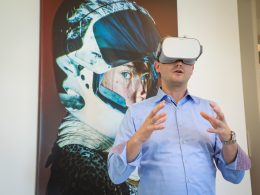
The professor from the USA is already raving about how, in a further development of the project, users equipped with 3D glasses could one day re-enact a gladiatorial battle in the Colosseum or take part in a chariot race in the Circus Maximus.
Flyover Zone, the company behind Rome Reborn, is planning to reconstruct Athens at the time of the philosopher Socrates and Jerusalem at the time of Jesus Christ.


 Deutsch
  Français
  English (UK)
  Italiano