


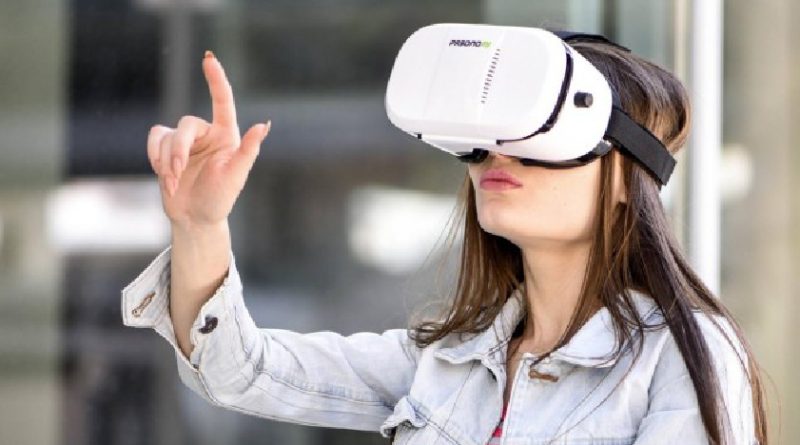

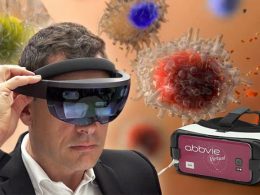
In Heilbronn, you can face your fears - whether it's spider nausea, fear of heights, social anxiety or claustrophobia. With the help of a virtual reality platform, you can jump into the depths or look at hairy insect legs.
The author Franziska Knupper from Deutschlandfunkkultur has tested a project called Evelyn in a laboratory, in which one can face various fears with the help of VR. If you don't feel like reading and would rather listen, you can do so on the website.
The laboratory she visited is located in Heilbronn. It covers a total of about 50 square metres and currently has 15 cameras installed that track the test persons. They move around freely with the VR headset because they are wearing a backpack, i.e. a backpack PC.
Scary Avatar Experience
Although Franziska Knupper does not otherwise struggle with fear of heights and social anxiety, according to her, the author became a little nervous before the confrontation. And when you read what she reports, probably somewhat rightly so:
"The chairs could either have audience members who stare at you or who explicitly don't listen. That's just one way of simulating social stress. But I actually found it creepiest that the system scanned me and created an avatar. That is, when I looked down at myself, I saw a foreign body. At one point, a mistake happened and the thing left my body and took on a life of its own, suddenly standing next to me all twisted up. That was much scarier than anything else."
What is exciting here is that it was not the actual test setting that provoked anxiety, but rather that the test person felt uncomfortable as an avatar. Such moments can be extremely traumatising for real anxiety patients and thus anything but helpful for coping.
VR still too unpredictable?
That is why the team repeatedly emphasised that these artificial worlds are still prototypes. The developers also know that much more individual worlds would have to be created for trauma patients, for example, than for phobic people. It is currently also being discussed in expert circles whether such experiences should be made at all without psychotherapists and what the risks behind them are.
Ein Experte mein dazu: „Ich persönlich halte, gerade zu Beginn einer Therapie, nichts davon, man weiss ja noch gar nicht, wie reagiert der Patient jetzt. Der hat wahrscheinlich bisher versucht, den angstauslösenden Reiz zu unterbinden, sodass man gar nicht damit konfrontiert wird und jetzt hat er im heimischen Wohnzimmer auf einmal so eine Konfrontation und je nachdem wie gut die VR gemacht ist und wie präsent er sich da drin fühlt, kann das natürlich auch ganz massiv zu Reaktionen führen.“
One advantage of using VR is the simplicity and cost savings for various settings. A patient with a fear of heights, for example, does not have to be accompanied to a skyscraper, but with VR this situation can simply be simulated.
Source: Deutschlandfunkkultur

 Deutsch
  Français
  English (UK)
  Italiano